Best At-home Ipl Devices for Broken Capillaries and Spider Veins
TL;DR — Our Picks
This article is for informational purposes only and does not constitute medical advice. Always consult a board-certified dermatologist or healthcare professional before starting any new skincare regimen, especially if you have existing skin conditions or sensitivities.
This article contains affiliate links. We may earn a commission on qualifying purchases at no cost to you.
If you're shopping for the best at-home ipl devices for broken capillaries and spider veins, this guide compares two realistic options and recommends the one I'd choose first.
The hard truth: most at-home IPL tools are designed for hair reduction first, not vascular concerns, so choosing the wrong one can waste money or irritate your skin. If you want the one I'd recommend first, it's the Braun IPL Silk·Expert Pro 5. It stands out for smarter energy adjustment, faster treatment sessions, and a better overall safety profile for people who want an at-home light device that may help improve the look of visible vessels while also pulling double duty for hair removal.
Quick Answer — best at-home ipl devices for broken capillaries and spider veins
The Braun IPL Silk·Expert Pro 5 is the best at-home option here. It's an IPL device with built-in skin tone sensing, fast flashes, and a more polished treatment experience, which is why it wins. It's best for you if you want the most reliable, user-friendly pick and you're realistic that at-home IPL may help visible redness and small superficial veins more than deeper spider veins.
What It Does — The Science Behind It
IPL stands for intense pulsed light. It uses broad-spectrum light that targets pigment in hair and, to a lesser degree, hemoglobin in superficial blood vessels. In dermatology clinics, light-based treatments are commonly used to improve the appearance of redness, broken capillaries, and some small visible vessels because the light energy may heat those targets and help the body gradually clear them.
That said, home devices are much lower in power than professional vascular lasers. That's good for safety, but it also means results for broken capillaries and spider veins tend to be more modest and less predictable. Research on IPL suggests it can support improvement in diffuse redness and some superficial vessels, but deeper, thicker, or raised spider veins usually respond better to in-office treatment.
This is why I tell people to think of at-home IPL as a cautious, maintenance-style option. It may help the appearance of tiny surface vessels in the right skin tone and treatment area, but it's not the same thing as a vascular laser. If your veins are worsening, painful, or extensive, a dermatologist or vein specialist is the better next step.
What To Look For — Shopping Checklist
Choose a device with skin tone sensing because that extra safety check matters when you're treating redness-prone skin. Prioritize consistent energy delivery over flashy marketing, since predictable pulses are more important than exaggerated claims. Look for a larger treatment window if you want to cover legs quickly, but make sure you can still position it precisely around small visible vessels. Cooling features can make sessions more tolerable, especially if your skin gets hot or reactive easily. Check the recommended skin tone and hair color chart carefully; IPL is not a fit for every skin tone, and using it outside the brand's guidance raises the risk of irritation. Be realistic about the target: tiny superficial capillaries may respond better than deeper blue or bulging spider veins. Skip any device that feels flimsy or inconsistent, because poor build quality often leads to patchy treatment and user error. If you also want hair reduction, a dual-purpose device gives you more value than a niche tool with weaker overall performance.
Our Top Picks for the best at-home ipl devices for broken capillaries and spider veins
For the best at-home ipl devices for broken capillaries and spider veins, these are the two I think are actually worth your attention. One is the clear best overall buy, and the other is the budget-friendly option I'd suggest if you want to spend much less without getting something junky.
Top Pick: Silk·Expert Pro 5 IPL
This is the one I'd recommend first if you want an at-home IPL device that feels the most refined and dependable. Braun's big advantage is its smart skin-sensing system, and while that's not a skincare ingredient in the classic sense, it functions like a safety feature built around your skin's melanin level, helping adjust intensity to a more appropriate range. That matters because visible vessels often sit in redness-prone skin, and overly aggressive heat can make things look angrier before they look better. The broad-spectrum intense pulsed light targets pigment and may also interact with hemoglobin in tiny superficial vessels, which is the mechanism that makes IPL relevant for broken capillaries in the first place. Braun also pairs that light delivery with continuous rapid flashes, so treatments feel smoother and quicker, especially on legs where spider veins often show up. In real use, this device has a sleek, polished handfeel and a less fussy learning curve than cheaper tools; that's a big deal because consistency matters more than heroic one-off sessions. With more than 7,000 reviews and over 2,000 bought in the past month, it's clearly a crowd favorite, and that lines up with why I like it: it reduces user error. I also think it's the better choice if you want one tool for both hair reduction and possible improvement in diffuse redness or tiny capillaries. The limitation is price, and the limitation of the category is even bigger: this may help very small superficial vessels, but I would not buy it expecting dramatic change in thick, darker spider veins. Who Should Skip It: Skip this if your main concern is larger leg spider veins or deeper blue vessels, because you may be better served by in-office vascular treatment instead of spending premium money on a home device.
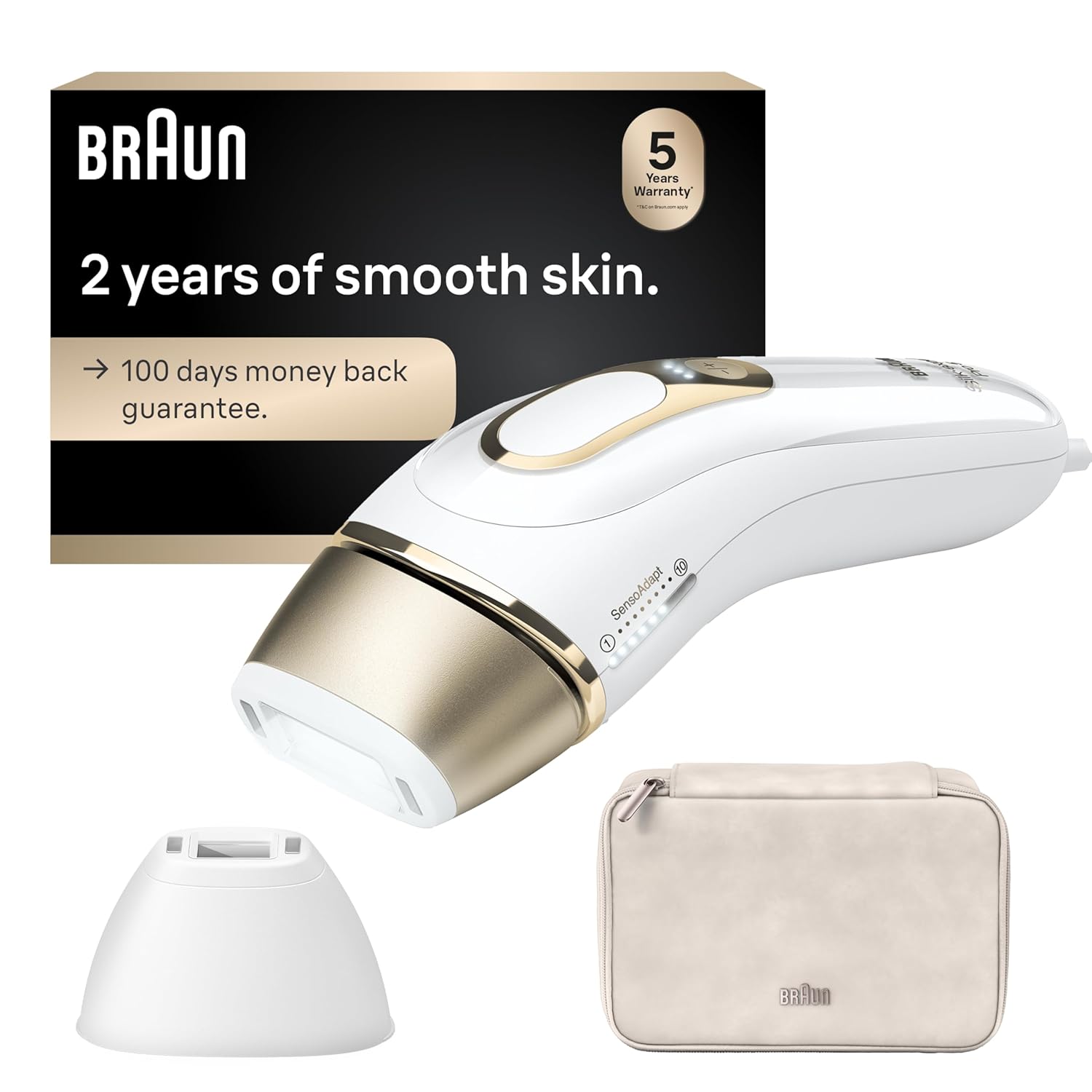
Silk·Expert Pro 5 IPL
Budget Alternative: INNZA IPL Hair Remover Ice Cooling
If Braun is too expensive, this is the budget pick I'd actually feel okay recommending. The standout feature is the ice-cooling design, which helps offset the heat sensation from the intense pulsed light and makes treatment feel more comfortable on sensitive areas. The device is described with 5J/cm² energy and a 600 nm wavelength, and that light energy profile is relevant because IPL works by delivering heat toward targets like melanin and potentially superficial hemoglobin, which is why some users try it for small visible vessels as well as hair. Its 999,999 flashes mean you won't be babying the device or worrying about replacing cartridges, which adds a lot of value at this price. I also like that customer feedback is unusually strong for a budget model: reviewers consistently say it's easy to use, solidly built, and surprisingly painless, and many specifically mention the cooling feature. That comfort piece matters because if a device stings too much, most people stop being consistent, and then results stall. In hand, budget IPL devices can sometimes feel plasticky, but this one gets good marks for build quality, which makes me trust it more than the average cheap option. It also has serious social proof, with over 4,000 bought in the past month and a Best Seller badge, so this isn't some random off-brand pick nobody has tested. Still, I would frame it as a value-first device, not a magic fix for broken capillaries and spider veins. It may help the look of very mild superficial redness while handling hair reduction, but I wouldn't expect it to outperform Braun for precision, polish, or long-term confidence. Who Should Skip It: Skip this if you have very reactive skin and want the most foolproof guidance system possible, because the Braun's smarter automation makes it the safer splurge.

INNZA IPL Hair Remover Ice Cooling
How To Use It — best at-home ipl devices for broken capillaries and spider veins
First, patch test exactly as the brand directs. With any device in the conversation for the best at-home ipl devices for broken capillaries and spider veins, the biggest mistake is treating too much, too soon. Start on clean, dry skin with no self-tanner, no heavy body oils, and no leave-on acids right beforehand. If you're using the device primarily on legs, shave the area if the device instructions call for it, then treat in an organized grid so you don't overlap excessively.
For broken capillaries, keep your expectations cautious and your settings conservative. Dermatologists typically recommend starting at a lower tolerated intensity when you're dealing with redness-prone skin, then increasing only if your skin stays calm. After treatment, use a bland moisturizer and avoid heat-heavy triggers that same day, like hot baths, saunas, or intense workouts, because those can temporarily worsen visible redness.
Don't pair IPL sessions with irritating actives on the same day. That means I'd hold off on strong retinol, glycolic acid, salicylic acid, and high-strength vitamin C right before and after treatment if the area is prone to sensitivity. A simple barrier-supporting moisturizer with ceramides, glycerin, or hyaluronic acid is the smarter move. Consistency matters more than intensity here, and if your skin starts looking persistently inflamed, stop and reassess rather than trying to push through.
Final Thoughts
If you want my honest pick for the best at-home ipl devices for broken capillaries and spider veins, get the Braun IPL Silk·Expert Pro 5. It's the more dependable, better-engineered device and the one most likely to give you a smooth, realistic at-home experience. If your budget is tighter, the INNZA is the one I'd try instead, especially if comfort matters to you.
FAQ
Do at-home IPL devices actually work for broken capillaries and spider veins?
They may help the appearance of very small, superficial vessels and background redness, but results are usually milder than in-office laser treatment. At-home IPL is generally better thought of as a lower-powered maintenance option than a direct substitute for professional vascular devices.
Is IPL safe for all skin tones?
No. IPL safety depends heavily on your skin tone and the device's built-in safeguards. Darker skin tones have more melanin, which can absorb more light energy and raise the risk of irritation or discoloration, so you need to follow the brand's skin tone guidance carefully.
Can I use these devices on facial broken capillaries?
You need to be very careful. Some IPL devices are cleared for certain facial areas, but the face is more reactive, and vessels around the nose can be stubborn. If your main concern is facial broken capillaries, especially near the eyes or on very sensitive skin, I usually think professional treatment is the smarter route.
How long does it take to see results?
If your skin responds, changes tend to be gradual over several weeks of consistent use. Hair reduction often shows up faster than improvement in visible vessels, which is why patience matters with these devices.
What should I avoid before and after IPL?
Avoid sun exposure, self-tanner, and sensitizing actives around treatment days. Hold off on strong retinol, glycolic acid, salicylic acid, and potent vitamin C when treating the same area. After treatment, favor simple hydration (hyaluronic acid, glycerin, ceramides) and avoid exfoliants for at least 24–48 hours.